

One of the biggest mistakes I see people make is believing they have to choose between getting better at Olympic lifting and improving everything else.
“I want to improve my snatch, but I also need stronger gymnastics.”
“I want to build strength, but I don’t want my clean & jerk to disappear.”
“I need to improve my mobility before I can even think about heavier lifts.”
The reality is that very few people are training purely to become Olympic weightlifters. Most of the athletes I coach want to become more capable across the board. They enjoy CrossFit, but they’ve realised that attending classes alone won’t solve every weakness.
The challenge isn’t choosing one goal. It’s learning how to make Olympic lifting fit around your priorities.
Olympic lifting is a skill first
The snatch and clean & jerk aren’t just strength exercises.
They’re highly technical movements that rely on timing, coordination, balance and consistency. That means they respond best to frequent, high-quality practice rather than simply lifting heavier weights.
This is good news if you have other goals.
You don’t need to dedicate six days a week to Olympic lifting to improve. You simply need enough quality exposure to keep developing the skill.
Think of it like learning a language. Speaking it for 15-20 focused minutes several times each week is far more effective than cramming for two hours once every fortnight.
Decide what your primary goal is
The biggest mistake made is trying to progress everything at the same rate.
Unfortunately, your body doesn’t really work like that.
If your current priority is building muscle and strength, your technical practice might take a back seat.
If your focus is strict gymnastics, your training needs will be different.
That doesn’t mean everything else stops. Because the beauty of combining disciplines is that if done correctly, it can all HELP each other! It simply means one goal gets the biggest slice of your training energy while the others are maintained.
A simple question to ask yourself is:
“At the end of this phase – if I looked back in 12 weeks, what would I be most disappointed not to have improved?”
That’s probably your priority.
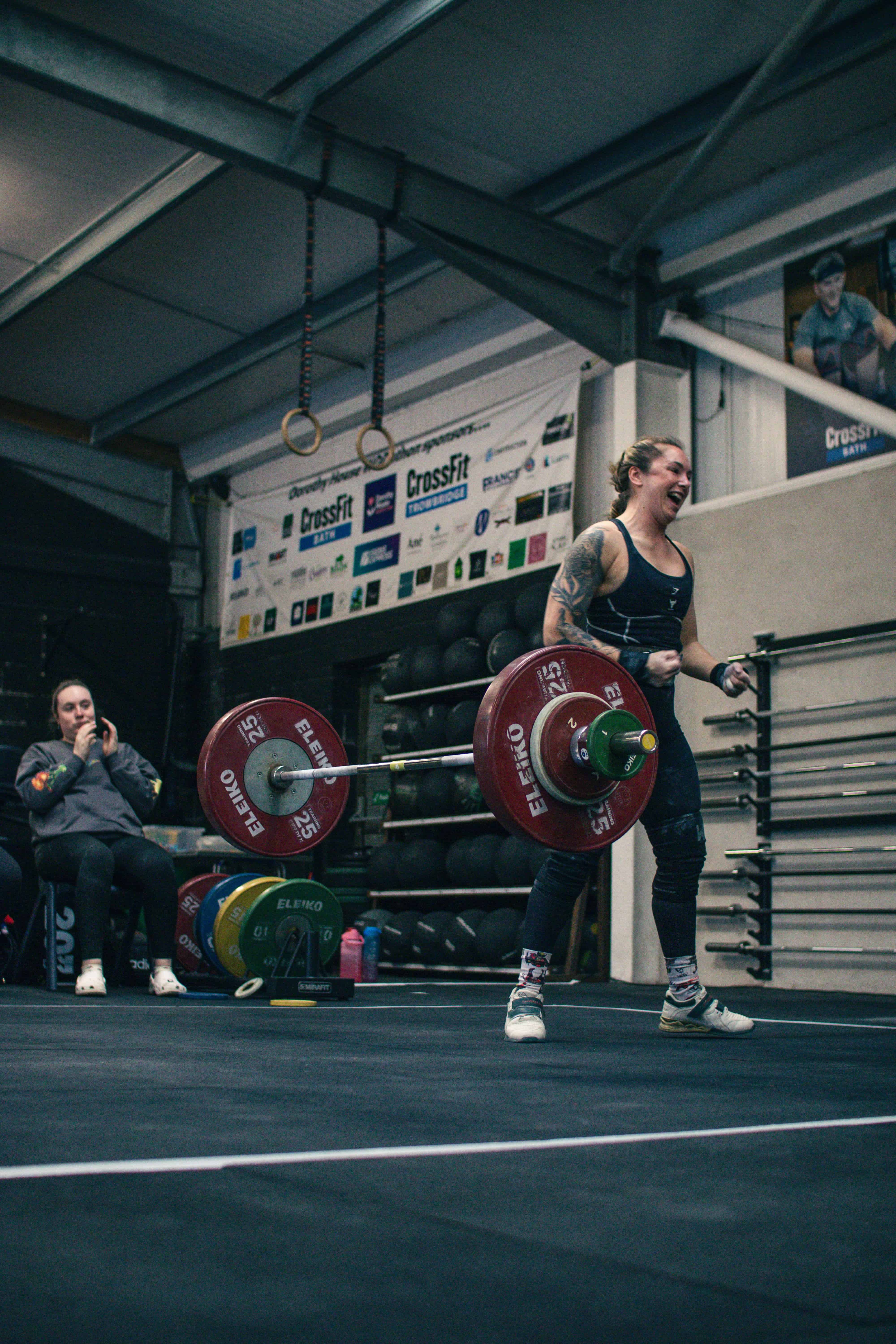
Use Olympic lifting to support your other training
Olympic lifting doesn’t have to compete with your other goals.
It can actually improve them.
Learning to produce force quickly develops explosiveness that carries over into jumping, sprinting and gymnastics.
Receiving positions improve mobility and stability.
Pulling variations build upper back strength.
Squats and accessory work strengthen the positions needed for both lifting and everyday training.
Rather than thinking of Olympic lifting as another thing to fit in, look for where it complements what you’re already doing.
Use the strength pieces to do just that and make sure you’re focussing on high quality technical work at lower percentages. AND NOT in workouts.
Quality beats quantity
This is especially true for athletes who train around work, family and all their other daily commitments.
An extra 30-45 minute session focused on quality movement often produces better results than adding another exhausting workout.
A productive Olympic lifting session might include:
- Mobility for the positions you struggle with.
- Technical drills.
- Snatch or clean & jerk work.
- A strength exercise or two – because developing strength in the right positions is key!
- A small amount of accessory work.
That’s it.
You don’t need to leave every session lying on the floor to make progress.
Don’t ignore the foundations
Many athletes become frustrated because they keep practising the lifts without addressing the reasons they struggle.
If you lack overhead mobility, unstable shoulders or sufficient leg strength, simply doing more snatches and stretching the living s*** out of your shoulders rarely fixes the problem.
Often the fastest progress comes from improving the limiting factor.
That might mean spending several weeks improving ankle mobility, front rack position, overhead stability or squat strength alongside your lifting.
Sometimes taking one step backwards allows you to move much further forwards.
Progress isn’t always adding weight
One of the hardest lessons for people who have been training for a while is recognising that improvement isn’t measured solely by kilos on the bar.
Progress might look like:
- Catching the bar in a more stable position.
- Receiving below parallel consistently.
- Hitting 90% lifts more often.
- Feeling more confident under heavier weights.
- Moving with less pain or restriction.
These changes build the foundation for bigger lifts later.
Final thoughts
Olympic lifting doesn’t have to dominate your training to be worth doing.
If your goal is becoming a better all-round athlete, the aim isn’t to fit everything into every week. It’s to prioritise intelligently, maintain what you’ve already built and consistently develop the skills that matter most.
For most people, that means a small amount of focused Olympic lifting alongside strength, mobility and whatever goal currently deserves your attention.
Because the athletes who make the most progress aren’t the ones who do the most.
They’re the ones who train with purpose.